This May marks ten years since I wrote my first article about bisexuality.
At the time, I had no grand plan. I wasn’t setting out to become an activist or a spokesperson. I just wanted to make sense of my own experience and maybe, if I was lucky, help a few other people do the same.
What followed was a decade of writing, broadcasting, debates, podcasts, and conversations with hundreds of bisexual people. And if there’s one question I keep coming back to, ten years on, it’s this:
How can the largest group in the LGBTQ+ umbrella still feel the least visible?
Because that’s the reality.
Bisexual people make up the majority, of the LGBTQ+ population. And yet, we’re still misunderstood, underrepresented, and often completely overlooked. Not just by wider society, but within LGBTQ+ spaces themselves.
When I started writing about bisexuality, the conversation was almost non-existent. There were very few visible bi role models. Media representation was limited, and when it did appear, it was often framed as confusion, indecision, or a stepping stone to being “fully” gay. In many ways, that has changed.
We now see more people openly identifying as bisexual. There are more conversations happening in the media. Podcasts like Bisexual Brunch have put bi voices front and centre. Younger generations, in particular, seem far more comfortable exploring and expressing fluidity in their sexuality.
On the surface, it looks like progress, and in some ways, it absolutely is. But scratch beneath that surface, and a different picture starts to emerge. Because visibility isn’t just about being present. It’s about being understood. And too often, bisexuality still isn’t.
One of the biggest challenges bisexual people face is that we are constantly defined by the relationship we’re in. If you’re with someone of the opposite sex, you’re seen as straight. If you’re with someone of the same sex, you’re seen as gay. The bisexual identity itself disappears.
I’ve lost count of the number of times I’ve spoken to people who say things like, “Well, aren’t you basically straight now?” It’s not always said with malice, but it reveals a deeper issue. People are still trying to fit bisexuality into a binary framework that simply doesn’t work. That lack of understanding has real consequences.
Over the past decade, through my writing and my advice work, I’ve heard from hundreds of bisexual people. And while their stories differ, the underlying themes are often the same: confusion, isolation, and a feeling of not quite belonging anywhere.
Too straight for the gay world. Too gay for the straight world. It’s a cliché, but it exists for a reason. And nowhere is this more apparent than in dating.
There’s a well-documented stigma around bisexual men in particular. Many women say they wouldn’t date a man or any man who has had sex with another man. At the same time, many gay men are sceptical of bisexuality altogether, viewing it as a phase or a stepping stone.
The result is a group of people who often feel like they have to edit themselves depending on who they’re talking to.
I’ve spoken to men who have spent years identifying as straight, hiding their same-sex attraction because they fear being judged or rejected. Others have identified as gay, suppressing their attraction to women because they feel it won’t be taken seriously.
In both cases, the outcome is the same: a life lived partially, rather than fully. And that’s something I don’t think we talk about enough.
We spend a lot of time celebrating Pride, as we should, but we don’t always acknowledge the quieter, more complicated realities that sit beneath it. The people who feel like they don’t quite fit into the spaces that are supposed to represent them. The people who are out, but not fully seen.
The people who, despite everything, still feel invisible. That’s not to say nothing has improved.
The fact that we’re even having these conversations now is a step forward. Ten years ago, I wouldn’t have been writing this piece. It wouldn’t have been commissioned. There simply wasn’t the appetite for it.
Now, there is. But progress isn’t the same as completion.
If the last decade has been about starting the conversation around bisexuality, the next decade needs to be about deepening it. Moving beyond surface-level acceptance and into real understanding.
That means better representation, not just token mentions and stories. It means more bisexual voices in media, politics, and culture.
And it means LGBTQ+ spaces taking a more honest look at how welcoming they truly are to bisexual people.
Because if bisexual people are still feeling marginalised within a community that prides itself on inclusion, then something isn’t right.
Ultimately, visibility isn’t just about being seen. It’s about being recognised for who you actually are. Not as half of something else. Not as a phase. Not as a compromise. But as a complete identity in its own right.
Ten years into this work, I’m proud of how far the conversation has come. But I’m also very aware of how far we still have to go.
Because until bisexual people can exist in the world without being questioned, redefined, or erased depending on who they’re standing next to… visibility will always be incomplete.
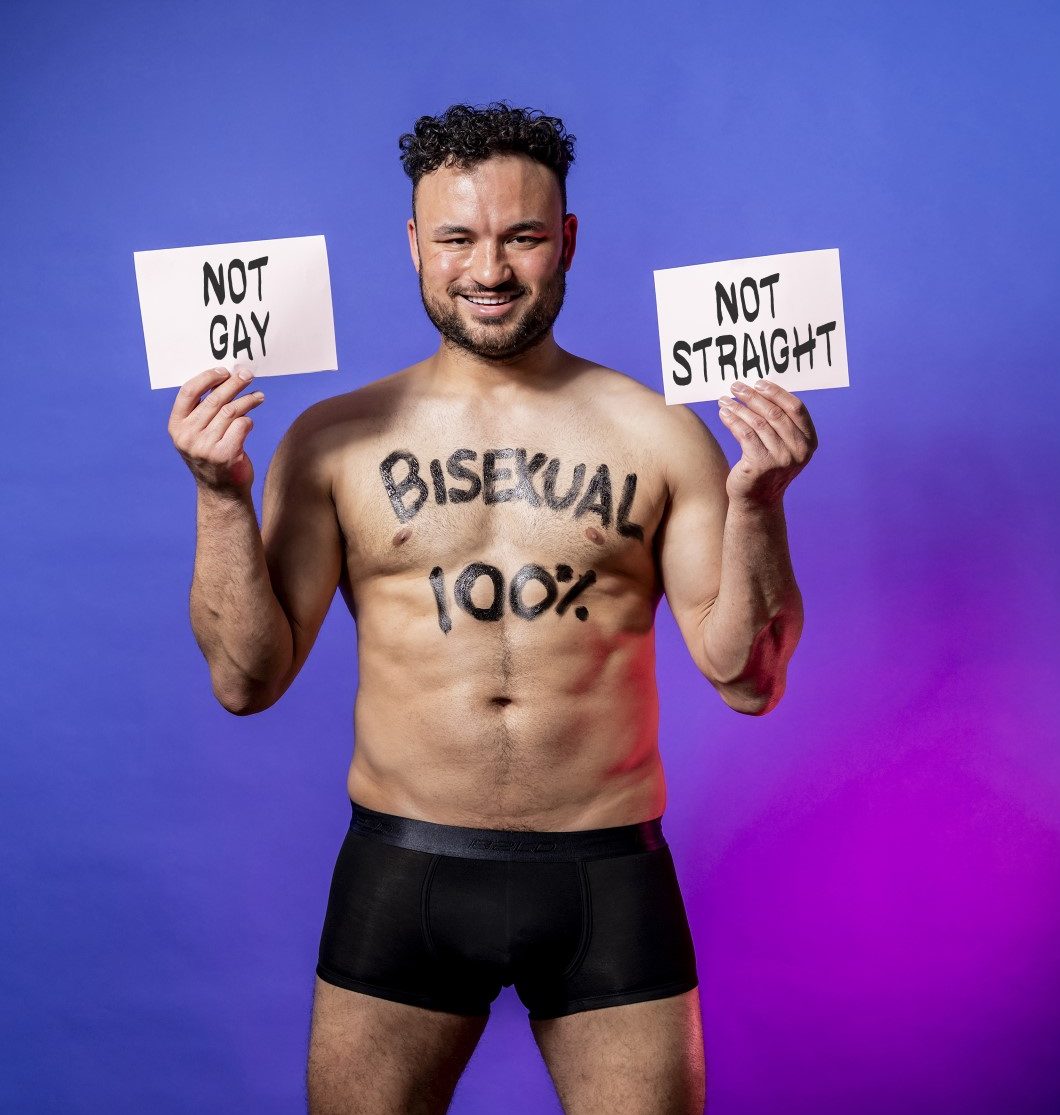
Images by Chris Jepson