


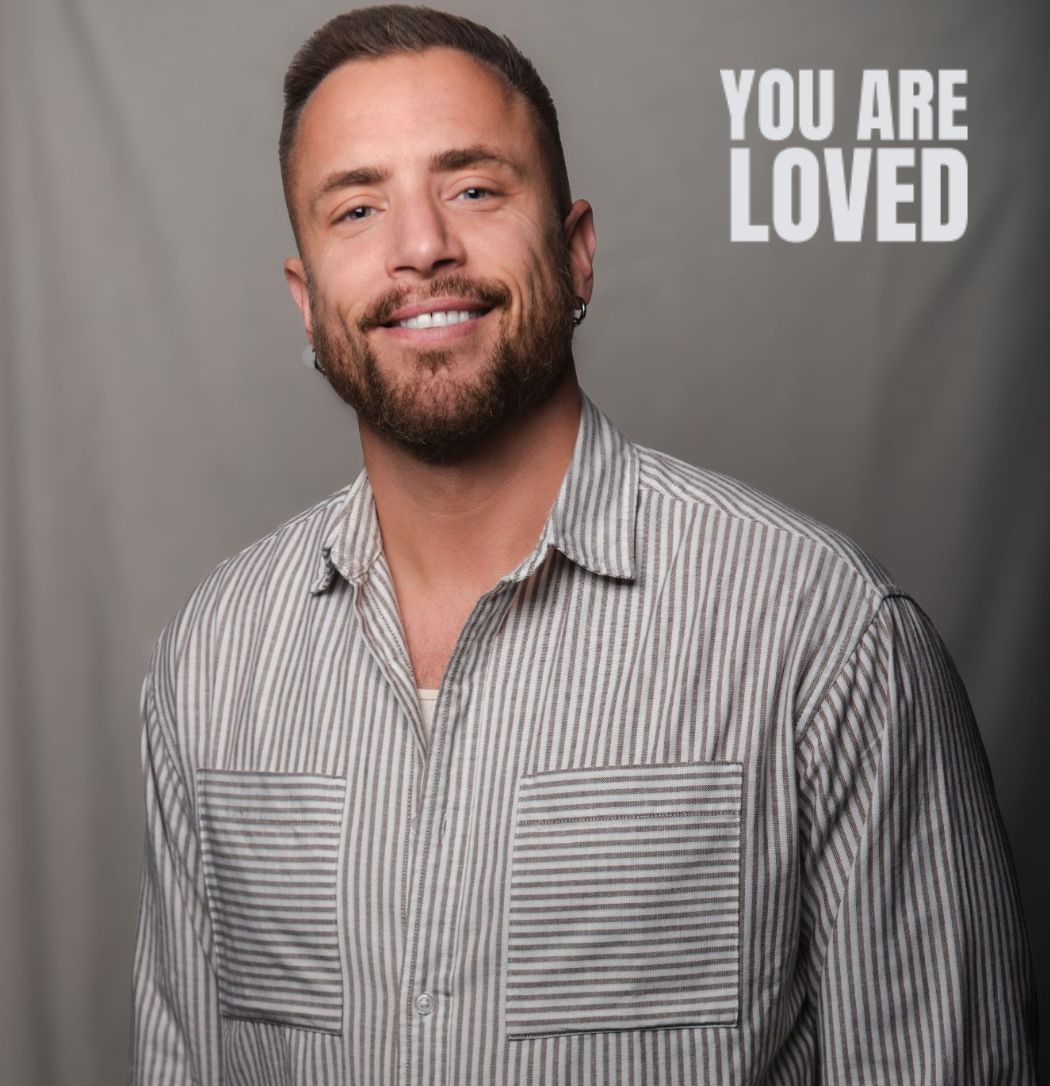
You Are Loved is tackling some of the hardest conversations facing the LGBTQ+ community right now, from suicide and addiction to loneliness and stigma. We spoke to founder Marc Svensson about why the organisation launched, what Ask Bobby actually does, and why prevention matters just as much as crisis support.
What first led you to launch You Are Loved, and what was the moment you realised this work was urgently needed within the LGBTQ+ community?
I’m a social psychologist who has spent the last twelve years researching LGBTQ+ mental health and wellbeing. I’m currently in the final year of my PhD at UCL, and before that, I founded Helsa, a startup that matched queer people with LGBTQ+-specialised therapists. After the pandemic, I closed Helsa to focus on completing my doctorate, but I couldn’t shake a growing sense of urgency I felt in the community here in London.
I’m originally Swedish but have lived in London for over twenty years, and in that time, I have always known loss within the queer community. But in the years following the pandemic, as I moved into my forties, the frequency of deaths from suicide and drugs around me began to feel qualitatively different. Friends, acquaintances, people known through the community, gone, often without warning and without explanation. What disturbed me as much as the deaths themselves was the silence that followed. A post would appear on social media, people would react, and then nothing. No honest conversation about what had actually happened or why.
As a researcher, I knew these deaths weren’t isolated. I was watching what the data already suggests: that queer people die prematurely at significantly higher rates than the general population, from suicide and drug-related causes. But the evidence base in the UK was fragmented, and the public conversation was nearly nonexistent. So in October 2024, I launched You Are Loved, a non-profit organisation dedicated to raising awareness of these deaths, evidencing their scale, and ultimately understanding and addressing their root causes.
The organisation speaks very openly about suicide, addiction, loneliness and stigma, topics that still make many people uncomfortable. Why was it important for you to tackle those conversations head-on?
Because silence is part of the problem. These topics are uncomfortable precisely because they carry so much stigma, and that stigma is one of the reasons they aren’t discussed until it’s too late. Death by suicide or drug-related causes is arguably the worst possible outcome, not only because it’s irreversible, but because it so often comes after a long period in which someone has been struggling in private, without adequate support.
In our first year and a half, we focused heavily on naming what is happening, making visible the fact that our community is dying at alarming rates. That was a necessary starting point. But we are now shifting focus toward the upstream causes: the loneliness and isolation, the shame and stigma around identity, and the discrimination people experience both from wider society and, at times, from within the queer community itself. The deaths are at the top of the pyramid. We now need to work much harder at the base — the conditions that, left unaddressed, push people toward crisis in the first place. Prevention, not just intervention and crisis support, has to be central to what we do to address this problem effectively.
For somebody discovering You Are Loved for the first time, what kinds of support, tools or community can they actually access through the platform?
You Are Loved operates across the full spectrum of need, and I think that’s what makes our approach somewhat unique.
At one end, when the very worst has happened, and someone has lost a person they love, we offer queer-specific bereavement support groups, both online and in person in London. These are free to attend, run biweekly, and are facilitated by a therapist who specialises in both bereavement and the queer experience. Losing someone to suicide or a drug-related death carries a particular kind of grief, often complicated by stigma, unanswered questions, and a lack of spaces where you can speak honestly about what happened. These groups exist to fill that gap.
In the middle of the spectrum sits Ask Bobby, our AI-powered hub for support and connection, which helps queer people find the right organisations, services, or communities for whatever they’re navigating, whether that’s mental health support, social connection, or something else entirely.
And at the prevention end, we run events, community groups, and conversations designed to engage people before crisis point — creating spaces where these difficult topics can be discussed openly, and where people can educate and look after one another better.
So wherever someone finds themselves, grieving, struggling, or simply looking to connect, there is something within You Are Loved that can meet them there.
Ask Bobby has quickly become a big part of what you offer. Can you explain what it is, and why making LGBTQ+ support easier to find really matters right now?
You Are Loved takes a deliberate, holistic approach to LGBTQ+ mental health. As a researcher, I know that complex social problems can’t be solved by a single organisation or a single type of intervention. What people need is a range of support that meets them where they are: professional mental health services, community groups, social connection, chemsex support, and everything in between.
The challenge we kept hearing about, and found evidence for in our research, is not that these resources don’t exist, but that people struggle to know how to find them. There are hundreds of brilliant LGBTQ+ charities, support services, informal social groups, sports teams, and community organisations across the UK. But if you’re feeling low, isolated, or uncertain, knowing where to look is itself a barrier.
That’s what Ask Bobby solves. It’s an AI-powered support hub (not simply a directory) that brings these organisations together in one place and then helps people navigate them. You can ‘Ask Bobby’ something as specific as: “I’m feeling lonely, I live in Norwich, and I’d love to meet people who hike or play tennis — what’s available near me?” and it will find and recommend relevant organisations tailored to your needs and location.
Building the infrastructure for Ask Bobby has taken some time and resources. We are now at the stage of scaling it and are currently running a fundraiser with a commitment to add one thousand organisations to Ask Bobby by the end of 2026, if we can raise £10,000 by end of June. You are loved is a small and young non-profit organisation, run mostly on passion and goodwill. We do not have a recurrent revenue stream, as all of the services we offer are free. Instead, we rely entirely on the generosity of people from within our community and beyond to support us financially, allowing us to help more LGBTQ+ through our services and events. Please head to youareloved.org.uk/donate to contribute and support our work.
A lot of queer people can still feel isolated, even in a city as connected as London. What are you hearing most often from the people reaching out to you?
Loneliness, or a sense of not feeling seen or understood, is one of the most prevalent issues. It might sound paradoxical, because many of the people I hear from live in cities like London, surrounded by people, with access to what looks from the outside like a thriving queer scene, but access to a community and actually feeling seen within it are very different things.
What I often see is that the loneliness queer people experience isn’t primarily logistical – it’s existential. It’s rooted in uncertainty about identity, in the experience of not being able to show up as your authentic self, and in the basic human need to feel genuinely known by the people around you. You can be in a room full of people and feel profoundly alone if you sense that who you truly are isn’t what they’re seeing.
That’s a harder problem to fix than simply connecting people to events or spaces, though that matters too. It requires inner work alongside community, which is something we try to hold space for across what we do as well.
There’s often pressure within LGBTQ+ spaces to appear fine, successful, social, and happy. Do you think that makes it harder for people to admit when they’re struggling?
Absolutely, and I don’t think this is unique to queer people, but I do think we experience it with particular intensity. There’s a framework called intra-minority stress, which describes how sexual minority men exist in a distinctive tension: raised in a patriarchal culture that teaches men to compete with one another, while also being attracted to the same men they’re competing against. That dynamic can create a uniquely corrosive social environment — one where status, appearance, and achievement are under constant scrutiny.
There’s also something else worth naming. For many queer people, the conventional markers of adult success — marriage, children, family — either don’t apply or come later and in different forms. That can generate real pressure to achieve and find purpose through other means: career, social standing, curating the appearance of a full and enviable life. When that pressure meets the cultural reluctance to admit struggle, people wait until they’re at crisis point before seeking help, which is both deeply human and genuinely dangerous.
A significant part of what You Are Loved is trying to do is shift that by creating spaces, events, and conversations where being honest about difficulty is normal, expected, even welcomed. Early intervention, not crisis response, is where we can make the most difference, I believe.
What would you say to somebody reading this who might recognise themselves in these conversations, but hasn’t yet reached out for support?
Don’t wait. The evidence is clear that the earlier someone addresses mental health concerns or feelings of isolation, the better the outcomes. Reaching out isn’t a sign of crisis. It’s a sign of self-awareness, and that’s a strength.
Start wherever feels manageable. Talk to someone you trust. If that isn’t an option right now, Ask Bobby is a good first step. It’s non-judgmental, available, and can point you toward support that fits your specific situation and location. And if you’d like to reach us directly, you can find us at youareloved.org.uk or email me personally at marc@youareloved.org.uk. You absolutely don’t have to be at rock bottom to deserve support.
Find support or donate at www.YouAreLoved.org.uk


